
 Membership
 Network
 Regional Sites & Affiliates


 Events
 Participate
 Resources

 Training
 Credentials
 Government


 Publications
 Tools


 Business Overview




Years ago, during an expansion at the Hard Rock Hotel in Las Vegas, a buyer told me he wanted our wastebaskets. When I met with him, I discovered why. He had tested numerous wastebaskets in ways no manufacturer would recommend. He filled them with ice. He turned them upside down and stood on them. Many warped or broke.
His tests reflected what actually happened after a long night of gambling, partying or attending a concert. Some guests filled wastebaskets with ice and beer. Others turned them upside down, stood on them and pretended they were playing guitar onstage.
It was funny, but it taught me a serious lesson: Good commercial design isn't about how people are supposed to use something. It's about understanding how they actually use it.
That lesson later shaped how I looked at another ordinary piece of infrastructure: the commercial pet waste station.
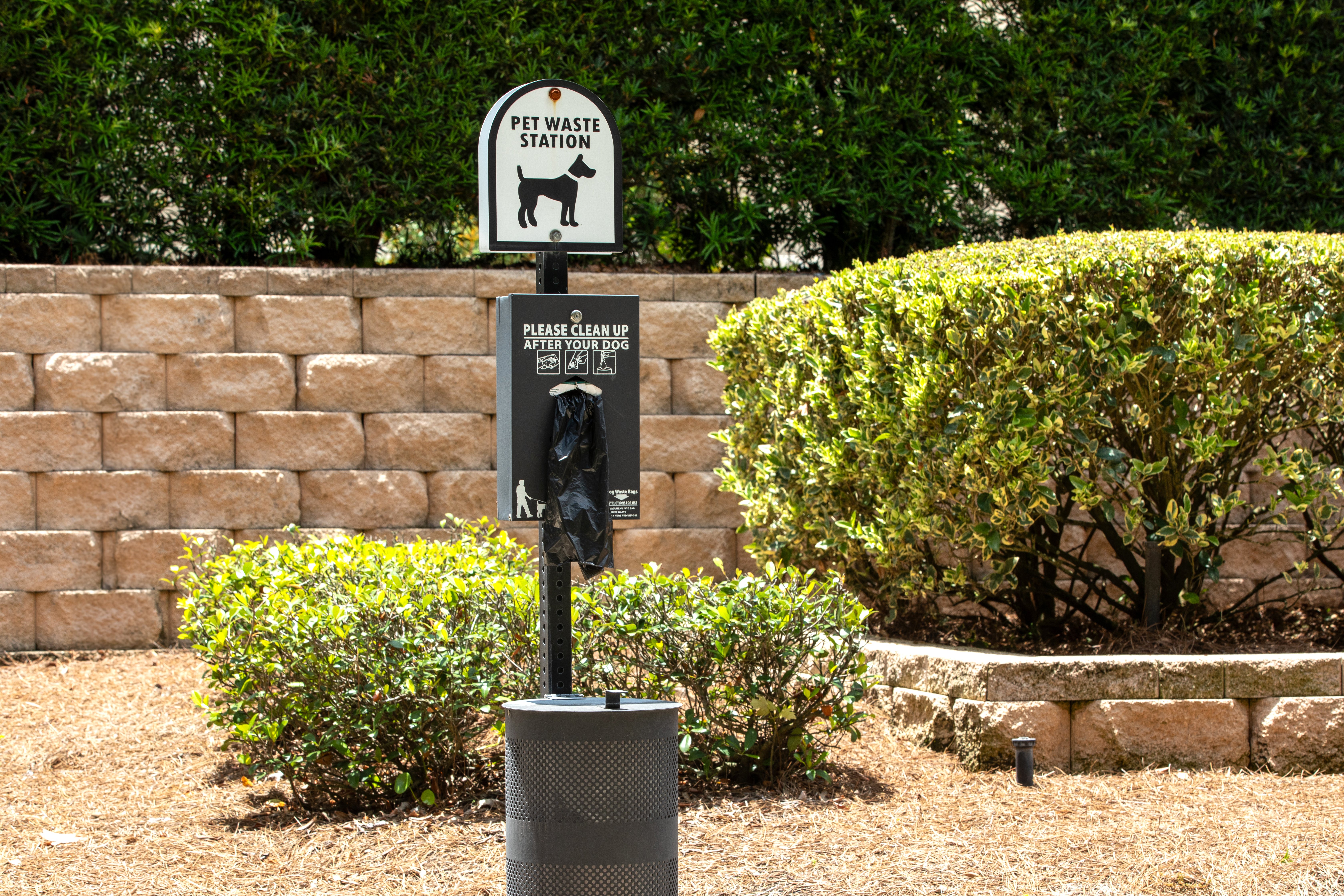
Pet-friendly has changed. Has the infrastructure?
In August 2026, Zillow reported that 77.3% of U.S. rental listings allowed pets. Fifty-nine percent of renter households had a pet, while 65% of renters considered pet-friendliness essential when deciding where to live. The American Pet Products Association reported that dog ownership reached 71 million U.S. households in 2025, representing 53% of households.
These are U.S. figures, but the facility-management question is broader: as properties respond to pet ownership and changing occupant expectations, has the infrastructure supporting those environments kept pace? When I examined commercial pet waste management, I found equipment that appeared to have changed remarkably little in decades.
Pet-friendly is a promise. Pet infrastructure is how a property delivers on it.
When accessibility became personal
My perspective changed after a serious accident temporarily forced me to experience the world from a wheelchair and later with a cane. Consider a foot-operated waste receptacle. It sounds sanitary and convenient: step on a pedal rather than touch a lid. Now imagine using it with a cane. You need your feet for stability, one hand for the cane and may also be controlling a dog and holding a waste bag.
Accessibility requires considering the different ways people use equipment. A method of operation that works comfortably for one person may be difficult for another. My experience made me more attentive to those limitations and to the everyday situations that design decisions can overlook.
Convenience over enforcement
One principle became central to my thinking: convenience over enforcement. Properties want residents and visitors to clean up after their pets. But before increasing enforcement, facility managers should ask whether responsible behavior has been made convenient.
Are stations where people actually walk their dogs? Are bags consistently available? Is there enough waste capacity for actual traffic? If a station is empty, overflowing or difficult to use, we've introduced friction precisely when we're asking someone to behave responsibly. Sometimes changing behavior starts by making the desired behavior easier.
Purchase price isn't the whole cost
What equipment costs to purchase and what it costs to operate are not necessarily the same thing. Pet waste stations require ongoing maintenance: replenishing bags, emptying waste, inspecting inventory, cleaning equipment and responding when something goes wrong.
A small difference in servicing time adds up. If a station takes 10 minutes to service twice a week, that is more than 17 hours of labor a year before travel time or repairs. Multiply that by the stations on a property, then compare it with the cost of supplies, replacement parts and equipment. Bag supply and waste capacity should reflect actual use; a low purchase price alone says little about the long-term cost.
The purchase price appears once on an invoice. The service schedule becomes part of the weekly workload.
Take a five-question walk
Facility managers can learn a great deal by walking their property and asking five questions:
-
Placement: Are stations where people actually walk their dogs?
-
Supply: Which stations run out of bags first, and how often?
-
Capacity: Which receptacles fill fastest, and does servicing frequency match usage?
-
Labor: How many maintenance touches does each station require?
-
Usability: Could someone comfortably use the equipment while controlling a dog, carrying a waste bag or using a mobility aid?
The answers may reveal that a property doesn't need more equipment. It may need better placement, different capacity or a more efficient servicing schedule.
Sometimes innovation starts by questioning the ordinary
The walkthrough also offers a way to test whether a proposed change will help. Record where bags run out, where receptacles fill and how long each service visit takes. Then adjust placement, supply or the servicing schedule and check those measures again. The results can guide a purchase decision more reliably than the initial price alone.
Innovation can begin with examining familiar equipment and asking whether it still serves the people using it. A pet waste station may be a small part of a property, but it gives facility managers a useful test: Does this everyday infrastructure work for the people who use it and the staff who maintain it? The answer starts with observation, then a practical change that can be measured.
About the Author: Avi Kosch, MBA, is the founder and CEO of NEXGEN DNA, Inc., and the creator of PooStation.com. He brings nearly 30 years of entrepreneurial experience spanning hotel ownership, real estate and product design and manufacturing for the hospitality industry. His work focuses on how everyday infrastructure can better serve the people who use it and the teams responsible for maintaining it.