
 Membership
 Network
 Regional Sites & Affiliates


 Events
 Participate
 Resources

 Training
 Credentials
 Government


 Publications
 Tools
Tools


 Business Overview




Energy costs are rising, supply is becoming less predictable and the pressure to reduce consumption is accelerating across global markets.
Facility managers are at the center of this shift, balancing immediate operational demands with long-term goals around efficiency, resilience and sustainability. This article breaks down what is driving today’s energy pressures and highlights practical tools and resources facility managers can use right now.

What’s driving the energy crisis?
Across global markets, organizations are facing a combination of:
- Increasing energy prices
- Supply instability and peak demand constraints
- Regulatory pressure to reduce consumption
- Growing expectations around sustainability and carbon reduction
Energy is already one of the largest operational expenses for many organizations, and without active management, those costs will continue to rise.
Where facility managers can take action now
While the challenges are complex, the most effective responses often start with practical, immediate steps.
1. Prioritize energy efficiency across operations
Improving efficiency remains the fastest and most reliable way to reduce both cost and risk. Simple actions such as optimizing HVAC schedules, correcting sensor errors and reducing simultaneous heating and cooling can deliver measurable impact quickly.
Need help?
- Start with actionable guidance like the Increase energy efficiency in buildings checklist, designed to help FMs implement short-term energy-saving measures right away.
- You can also explore Practice makes perfect: Enhancing FM through efficient energy practices for additional strategies to reduce consumption and improve performance.
2. Use data to guide decisions
You can’t manage what you don’t measure. Energy analytics and building performance data can help identify inefficiencies, forecast demand and support smarter operational decisions. Organizations that actively manage energy consumption are better positioned to control costs and maintain performance during periods of volatility.
Here are a couple resources to help you get started:
- Perspectives: New ideas on energy management and corporate sustainability, which provides data on energy markets, management strategies and corporate sustainability.
- Apples to apples: Developing a sustainable energy strategy to learn how to develop a sustainable energy strategy.
3. Prepare for peak demand and operational disruption
Rising demand and grid strain increase the risk of outages and disruptions. Proactive planning, system checks, and load management strategies can help maintain continuity and reduce financial risk.
Resources like:
- Smarter solutions highlight the growing strain on grid infrastructure and how distributed energy resources can help.
- Cost cutters: Helping retail centers navigate a volatile energy landscape offers practical approaches to maintaining operations during periods of instability.
4. Align energy strategy with long-term goals
The energy crisis is closely tied to broader sustainability and net-zero commitments. Facility managers play a critical role in aligning short-term actions with long-term decarbonization strategies.
To support this, explore:
- How to plan a decarbonization plan for a building
- How FMs can lead net-zero carbon journey
- Hybrid working & sustainability
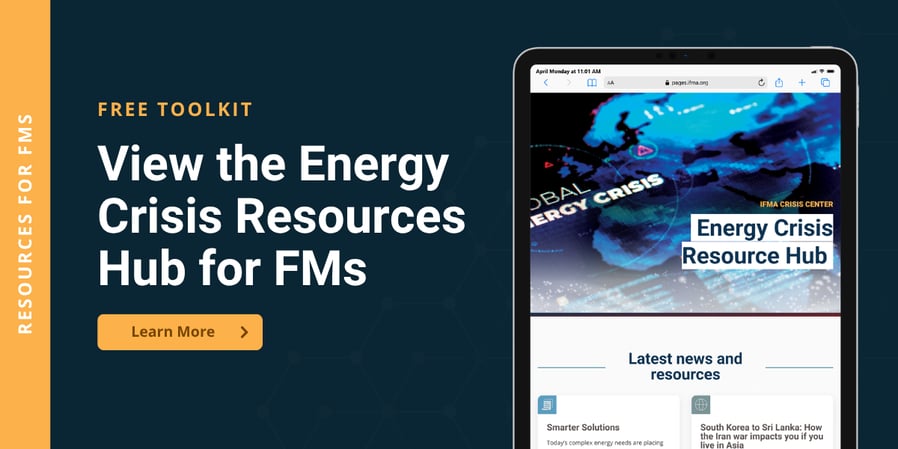
Access the IFMA Energy Crisis Resource Hub
Navigating the energy crisis requires more than a single solution. It requires access to practical tools, real-world insights and proven strategies.
IFMA’s crisis resource hub brings together a curated collection of global resources, including:
- Practical tools like energy efficiency checklists to support quick wins
- In-depth articles and blogs on decarbonization, energy strategy and operational resilience
- Global insights on how geopolitical and market shifts are impacting energy supply and cost
- Real-world examples of how facility managers are responding
Explore IFMA’s crisis resource hub to access practical tools, expert insights and global resources that can help you navigate ongoing energy challenges and take action today.
Do you have suggestions for other resources to include? Share resources with the broader facility management community by completing this brief form.

.png?width=352&name=Blog%20Graphics%20(21).png)
.jpg?width=352&name=GettyImages-863141554%20(1).jpg)