
 Membership
 Network
 Regional Sites & Affiliates


 Events
 Participate
 Resources
 Training
 Credentials
 Government


 Publications
 Tools
Tools


 Business Overview




Facility management across Africa is evolving, and the conversation is increasingly focused on what it will take to scale that progress.
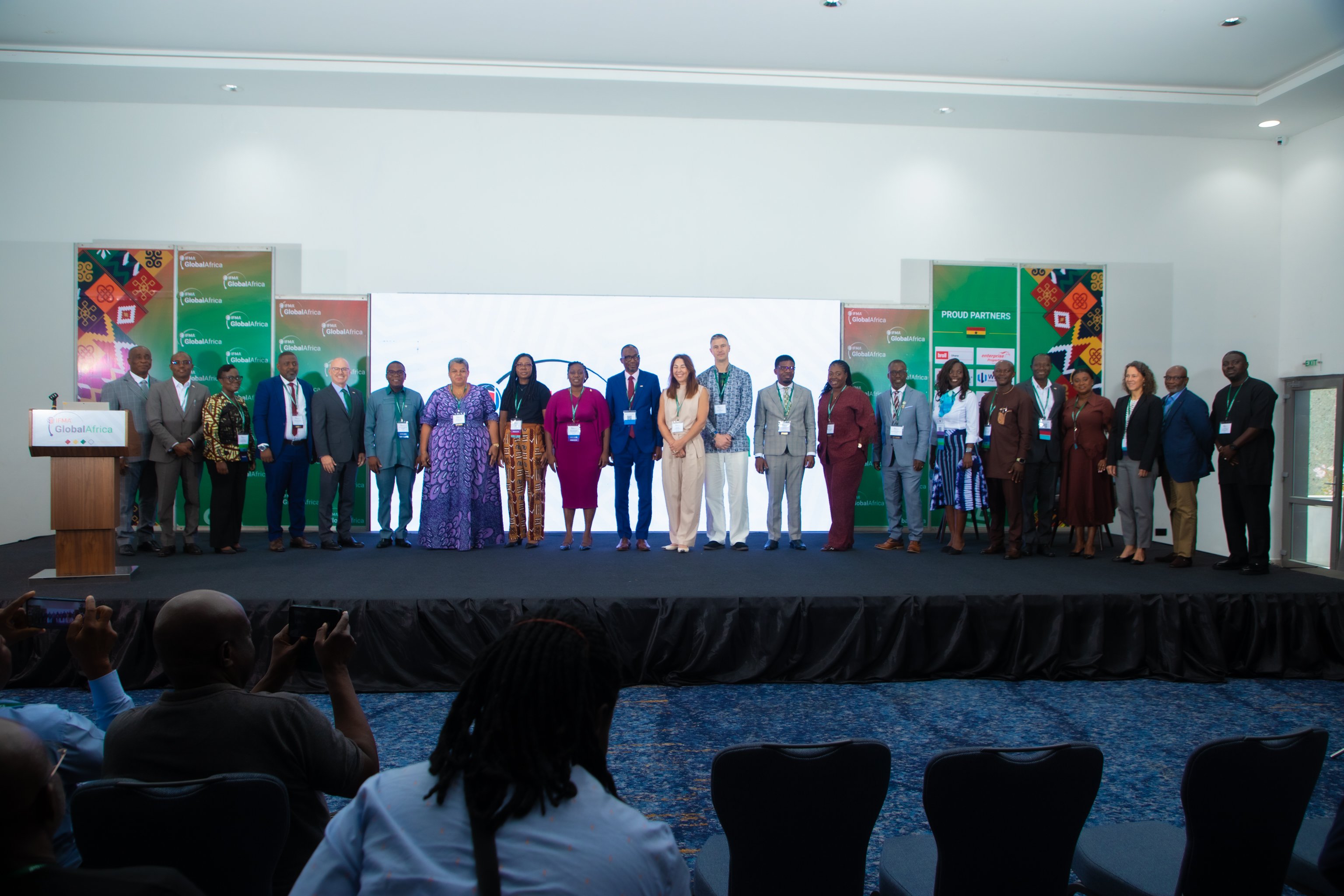
More than 250 facility management professionals, business leaders, educators, students and industry experts came together in Accra, Ghana, for IFMA Global Africa 2026. Under the theme “Scaling Up: Technology, Talent, and Transformation in Facilities Management for Developing Markets,” the conference explored how the profession can grow while remaining responsive to the realities of the markets, organizations and communities it serves.
Across two days of education, networking and discussion, one idea surfaced again and again: The future of FM in Africa will depend on more than adopting new technology. It will require skilled people, stronger professional structures, supportive policies and solutions designed for local needs.
Here are some of the biggest themes that emerged from Accra.
%20(1).jpg?width=3072&height=2048&name=Auditorium%20(17)%20(1).jpg)
1. Digital transformation has to solve real FM problems
Technology is changing how facilities are operated around the world, but successful digital transformation is not simply about adding more tools.
Sessions including “Digital Innovation in Facilities Management: Leveraging Technology” with Martin Ayitah and “From Clipboard to Cloud: Digitalizing Facilities Management in Africa's Emerging Markets” with Kenneth Donkor-Hyiaman, Eric Paul Tudzi and Sonne Frieda examined the opportunities and barriers surrounding digital FM.
The conversation went beyond what technology can do to focus on how organizations can make adoption practical and scalable.
The most sophisticated solution is not necessarily the most valuable one. The right technology is the technology that helps teams make better decisions, improve service delivery and solve the challenges they face every day.
2. The future of FM depends on the people behind it
As technology changes the work, facility management also faces another challenge: building the workforce that will lead it.
Sessions such as Yussif Salford's “Building the Future FM Workforce in Developing Markets: Skills, Structure and Professional Identity,” Pierre Krieger's “Why Facilities Management Must Reinvent Itself to Attract Talent” and Oluwaseun Yinka Alabi's “Beyond Technical Skills: Transforming Facilities Management Leadership Transitioning in Africa” brought the talent conversation to the forefront.
Technical expertise remains essential, but today's FM professionals are increasingly expected to communicate with senior leadership, manage change, interpret data, lead teams and connect facility decisions to organizational priorities.
That creates an opportunity for the profession.
Building the next generation of FM talent means creating clearer pathways into the profession while helping current professionals develop the leadership and business skills required to advance it.
It also means telling a stronger story about what a career in facility management can offer. As FM becomes more connected to technology, sustainability, workplace strategy and organizational performance, the profession has an opportunity to attract people with an increasingly diverse range of skills and backgrounds.
3. Sustainability must reflect local realities
Sustainability was another major theme in Accra. Portia Addo-Okyireh explored this in “Beyond Green: Integrating Health, Safety, and Sustainability for Resilient Facilities in Developing Markets,” while Gerald Ukor addressed circularity and ESG through a health care lens in “Closing the Loop in Healthcare Facilities: Embedding Circular Economy Principles and ESG Accountability.”
The takeaway was clear: Sustainable facility management cannot rely on a one-size-fits-all approach.
Strategies need to account for local infrastructure, resources, climate, regulations and organizational capacity. For facility managers, the opportunity is to translate ambitious sustainability goals into practical actions that improve resilience, reduce waste and deliver measurable value over time.
4. Scaling FM requires stronger governance and greater visibility
Facility managers can transform individual buildings and portfolios, but scaling the profession requires looking beyond the facility itself.
Babatunde Ogundiran's “From Policy to Performance: Scaling Facility Management through Governance, Regulation, and Social Impact” and Remigius Mmegha's session on “Policy, Governance, Workplace, and Social Impact” examined the systems surrounding FM and their influence on the profession's growth.
As buildings, infrastructure and workplaces become more complex, facility management has an opportunity to contribute earlier and more strategically to the decisions that shape them.
Greater recognition of FM at the policy and organizational levels can help shift the profession from being viewed primarily as an operational function to being recognized as a contributor to long-term performance, resilience and economic development.
5. Smart facilities still need the human factor
With AI, automation, sensors and data becoming more prevalent, it can be easy to focus the future of FM entirely on technology.
But facilities ultimately exist for people.
Gyan Awuku-Sao's “The Human Factor in Smart Facilities” brought that reality into focus, while Matt Tucker's “FM Beyond Walls” challenged attendees to think more broadly about the reach and impact of the profession.
The technology behind a building matters. So does the experience of the people using it.
The next generation of smart facilities will require FM professionals who can connect data, technology and physical assets with human needs and organizational outcomes.
That balance may become one of the profession's most valuable capabilities as workplaces and facilities continue to evolve.
.jpg?width=3072&height=2048&name=Networking%2002%20(1).jpg)
Bringing the FM conversation beyond the conference
The conversation about the future of facility management did not stop at the conference doors.
During IFMA Global Africa, IFMA leaders also joined GhanaWeb TV to discuss the growing role of facility management, the opportunities facing the profession and why FM matters to the future of the built environment.
These conversations reflect a broader shift taking place across the profession. Facility management is becoming part of discussions about sustainability, workforce development, technology, infrastructure, organizational strategy and the future of cities and communities.
Where will the global FM community meet next?
IFMA Global Africa 2026 was one gathering in a much larger global conversation about the future of facility management.
Throughout the year, IFMA brings the FM community together at events around the world to exchange ideas, learn from industry experts and peers, explore emerging trends and build connections across the profession.
Explore upcoming IFMA conferences, events and learning opportunities around the world and find the next opportunity to join the conversation.
.jpg?width=352&name=GettyImages-1331287157%20(2).jpg)